
How to Get Court Records
Court records in Kimble County are split by court. The District Clerk holds 452nd District Court civil, family, and felony files. Probate, guardianship, county civil, and county criminal cases belong to the County Clerk. Traffic, small claims, and evictions sit with the Justice of the Peace. Junction Municipal Court keeps city cases on its own.
Try re:SearchTX or Tyler UCMS first when the court participates. If nothing comes back, call, email, mail, or visit the responsible clerk. Kimble County has no all-purpose case-record form. Include the court, cause number, case style, filing date or range, exact document, copy count, and whether you need certification. Request a cost estimate before any broad search. The Texas Public Information Act covers ordinary government records. Case files, though, follow court rules, statutes, orders, and clerk procedure.
- Identify the court and record type.
- Search for the cause number and exact filing.
- Contact the clerk by phone, email, mail, or at the counter if online coverage fails.
- State whether inspection, a plain copy, or certification is needed.
- Confirm cost, delivery, active office location, and access limits.
Kimble County's Split Clerk Route
Karen E. Page appears on both local clerk pages, and the state directory describes the office as a combo clerk. That shared contact does not merge the legal functions. Label a request as district or county work so it reaches the right file set. The current public contact is 105 Reid Road, Junction, Texas 76849, telephone (325) 446-3353, fax (325) 446-2986, and email k.page@co.kimble.tx.us.
The official Texas court directory can verify court type and county. It is not a case search.
The official directory screen shows the filters used for that check.
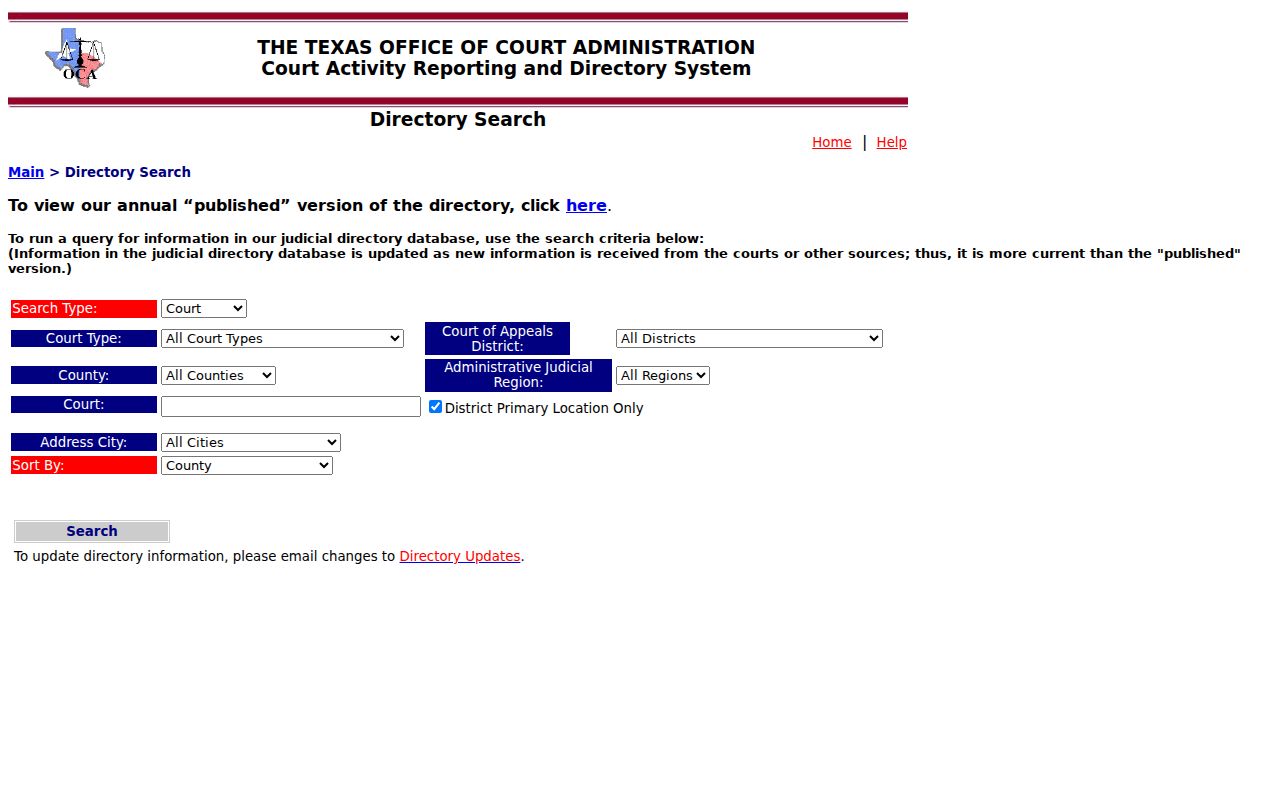
The screen helps identify a custodian, while the clerk supplies the actual record.
Kimble County District and County Clerk
105 Reid Road
Junction, TX 76849
(325) 446-3353
Types of Court Records
Think of the docket as the event index. Behind it, a case file may hold pleadings, motions, notices, orders, judgments, service papers, and public exhibits. District records cover felony, major civil, and family matters. County Clerk files include county criminal, county civil, probate, and guardianship. Justice Court handles fine-only crime, traffic, small claims, and eviction. A city citation goes to Junction Municipal Court if that court issued it.
Property indexes, county minutes, and historic sources are records too, just not court dockets. iDocket is linked from the clerk pages and named as the County Clerk's management system, yet its public landing page describes property indexes and documents. The county-linked iDocket landing page shows that property-record focus. Confirm court-case coverage before relying on it.

A failed property search proves nothing. It does not mean a Kimble County court record is missing.
Kimble Records During Restoration
The courthouse restoration moved people around. A September 2024 notice puts the County and District Clerk at 105 Reid Road. The courthouse itself is still listed at 501 Main Street. Check county pages before you drive over. Offices and courtrooms shift on their own schedules. The 452nd District Court page sends proceedings to the Stevenson Community Center. That change was posted for January 2025. But that hearing venue is not where you pick up records.
Distance or a digital barrier can make a visit impractical. So lean on mail and email. Give enough facts to find the record, yet skip sensitive details you do not need. The county accessibility page offers phone, email, and mail help. If a vendor portal fails, the clerk fallback still stands.
Note: Verify the office address and the event venue separately. A records request and a court appearance can lead to two different places.
What a Court Record Contains
What shows up depends on the court and case type. re:SearchTX may list a case summary, parties, attorneys, judicial officers, filings, documents, and hearings. Tyler UCMS can separate cases, judgments, and warrants, and it refines results by status, date, and officer. Fields can go missing because of sealing, redaction, older records, or incomplete portal integration.
| Court and cause number | Identifies the custodian and specific matter. |
|---|---|
| Case type and status | Describes the matter and whether it is pending or disposed. |
| Register of actions | Lists public filings and court events by date. |
| Hearings | May show date, type, officer, room, or appearance mode. |
| Orders and judgment | Records rulings or final action when public. |
| Seal or redaction | May explain a hidden document or field. |
A document listed online may still need a clerk request. The Kimble County case search can locate a cause number first.
Kimble Portal Printouts and Copies
Online access is for discovery and review. A download is never a certified record. re:SearchTX is the statewide layer, and Tyler UCMS serves participating counties. Each may need a working browser session, JavaScript, or cookies. eFileTexas is different, since it receives filings and is not a public docket search. The Texas trial-court overview shows why court type matters.
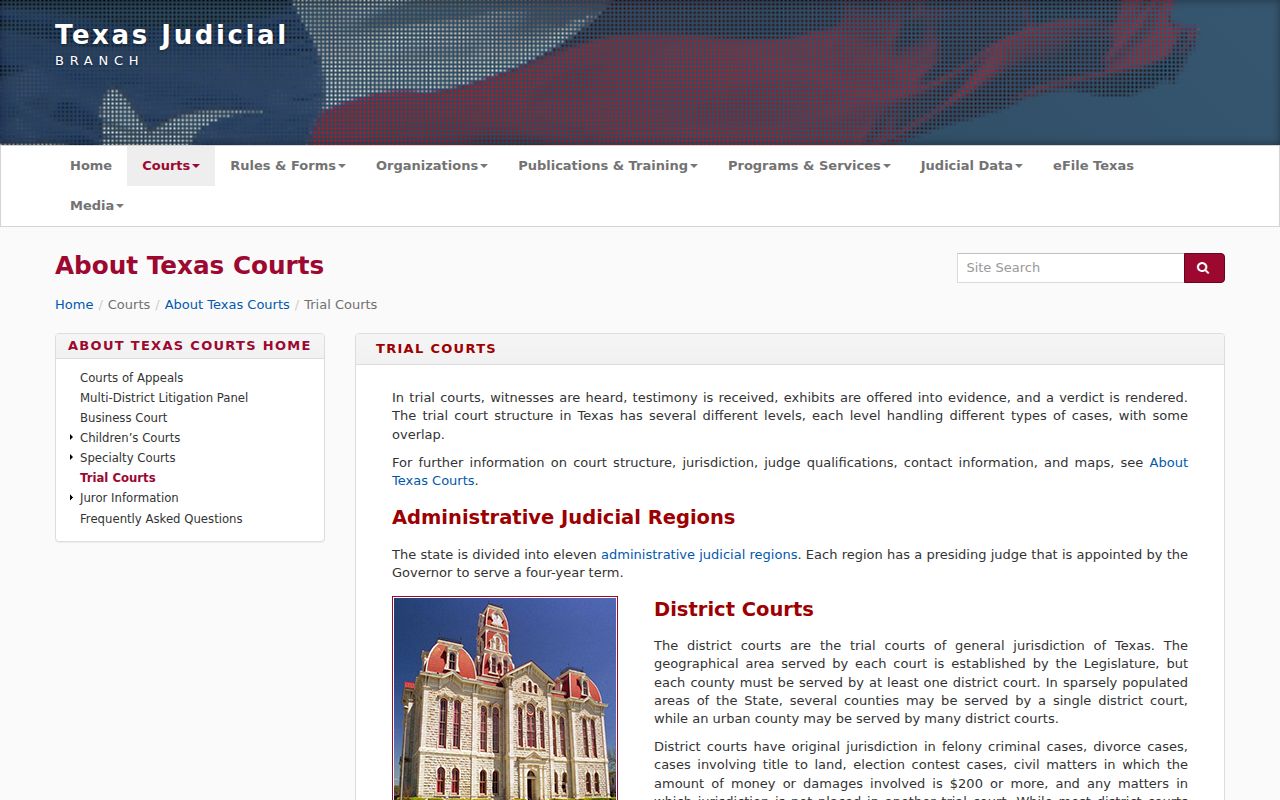
That statewide structure explains the local habit. Pick the court first, then ask its clerk for an official copy.
Certified Copies and Fees
Kimble County's fee sheets, district and county alike, price plain copies at $1 per page and certified copies at $5 per document. Those figures carry a source date. The county sheet says it is effective in 2025 even though it sits in a 2026 URL folder, and other costs may apply.
| Service | Listed amount | Request detail |
|---|---|---|
| Plain copy | $1 per page | Confirm page count and current price. |
| Certified copy | $5 per document | Name the exact item and copy count. |
| Broad search | Ask the clerk | Request an estimate first. |
Provide your contact details, the court, cause number, document name and date, copy count, and delivery preference. Ask how to pay. The county offers no general online certification form, so work through the clerk.
Kimble Records Under Rule 12
The Public Information Act covers many public-body records. Yet it is not the default route to an adjudicative case file. According to the Judicial Branch open-records policy, court files answer to court rules, statutes, orders, and clerk procedure instead. Rule of Judicial Administration 12 then comes into play. It backs inspection and copying of many judicial records. Some other authority can still close them off.
Rule 12 has limits worth knowing. It cannot force an office to create a record or answer research questions. Nor can it make a clerk keep material forever. For ordinary county administrative records, turn to the Attorney General's PIA overview. If the status of a record is unclear, ask the clerk's office which route governs.
Public Access and Sealed Records
Public does not mean everything. Texas Rule of Civil Procedure 76a governs sealing in civil cases. Rule 21c requires clerks to redact certain personal and financial data before a filing goes public. Juvenile records sit under separate limits in Family Code chapter 58. So a Kimble County court docket can be open. Parts of the file may still stay hidden.
One local order tightens access further. In May 2024 the court restricted public access to documents in certain 452nd District Court DFPS suits. Those suits were filed under Family Code chapters 261, 262, and 264. A posting docket may still show that a hearing exists. The underlying file, though, remains closed.
Key access rules:
Rules 76a and 21c address sealing and sensitive-data redaction.
Family Code chapter 58 restricts juvenile records.
The local DFPS order limits covered child-protection documents.
Kimble Archives Are Not Case Files
Kimble County's own history explains why no online docket can promise complete coverage. An early courthouse burned in 1884, according to Texas Historical Commission material. County records went with it. The current Art Moderne courthouse dates to 1929. Minutes and historical markers document the building and county administration over the years. They cannot replace a docket entry or a certified case record.
Genealogy and historic research still work; they just need precision. Name the likely court, the year range, the names involved, and the type of record you want. Then ask whether the material sits in the active office, moved to an archive, or was lost. That habit respects real gaps. It also keeps a portal's coverage date from being mistaken for the start of Kimble County court activity.