
How to Search Civil Dockets
Use the District Clerk for district civil and family cases in the 452nd Judicial District Court. Use the County Clerk for constitutional County Court civil, probate, and guardianship records. Small claims and evictions belong with the Justice Court.
Both clerk pages link re:SearchTX and Tyler UCMS. Search by cause number when possible. A party name, filing range, case type, and court can narrow results without using sensitive personal data.
- Identify district, county, probate, guardianship, or Justice Court jurisdiction.
- Choose that court or county in the portal.
- Search by cause number, or use a name and narrow date range.
- Confirm the court, case type, filing date, and party role.
- Ask the clerk for a missing file, judgment, or certified copy.
Kimble Civil Docket Clerks
Karen E. Page appears on both Kimble clerk pages, yet the court functions differ. District civil and family suits route to the District Clerk. County civil, probate, and guardianship route to the County Clerk. Justice Court keeps its own small-claims and eviction docket.
| Matter | Court | Office |
|---|---|---|
| Major civil and family | 452nd District Court | District Clerk |
| County civil | County Court | County Clerk |
| Probate or guardianship | County Court | County Clerk |
| Small claims or eviction | Justice Court | Justice of the Peace |
Selecting the wrong office can cause an empty search even when a record exists. State the court and case category when contacting the clerk.
What a Civil Docket Shows
A Kimble County civil docket can show the cause number, court, case type, filing date, status, party roles, counsel, judicial officer, hearings, public documents, orders, and judgment. A setting can also state whether a hearing is in person or electronic.
| Cause number | The court's exact file identifier. |
|---|---|
| Parties | Public names and roles, subject to restrictions. |
| Filings | Petitions, answers, motions, and available documents. |
| Settings | Hearing date, time, type, and appearance mode. |
| Judgment | A final order, dismissal, or other disposition. |
A docket entry shows that an event was recorded. It does not replace the filed document. Obtain the order when its exact terms matter.
Kimble Civil Docket Portals
re:SearchTX can show summaries, parties, counsel, filings, documents, and hearings when available. UCMS offers Smart Search and a hearing search. Neither source promises every Kimble civil file or page.
The official County Clerk page displays the current county civil and probate search links.
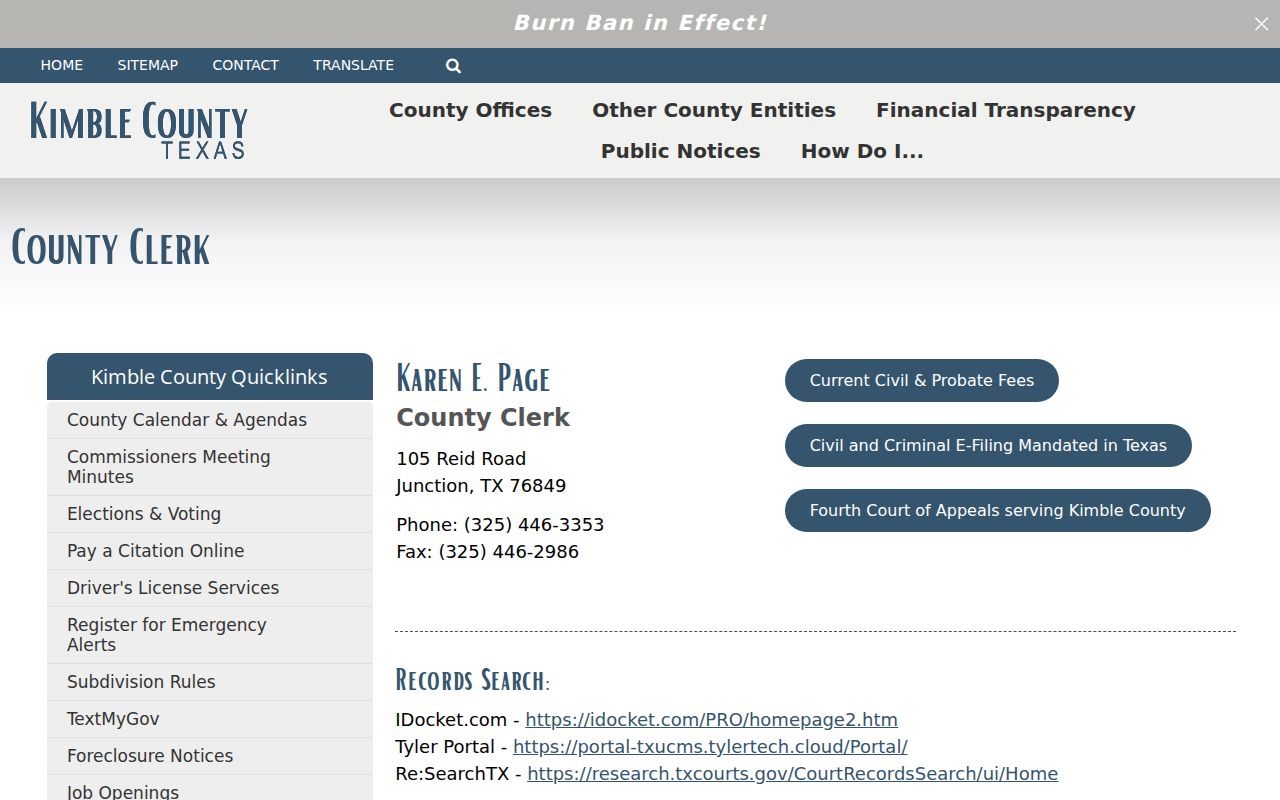
The clerk landing is the right fallback if a portal needs JavaScript, rejects a search, or lacks the needed document.
Types of Civil Cases on the Docket
The District Clerk fee sheet uses local labels such as contract or consumer debt, condemnation, delinquent tax, forfeiture, injury or damage, land dispute, and malpractice. They aid search filtering but do not state all district jurisdiction.
- Contract and consumer-debt claims
- Condemnation, tax, and land disputes
- Injury, property-damage, and malpractice matters
- Family suits and later enforcement or modification filings
- Probate, guardianship, and Justice Court claims
Family filings include later SAPCR, contempt, modification, and enforcement categories. SAPCR means a suit affecting the parent-child relationship. The dated fee material should be used as filing vocabulary, not as current legal advice.
Kimble Civil Probate Dockets
Probate and guardianship records are County Clerk matters. The county sheet lists applications, guardianship filings, adverse actions, inventories, reports, accounts, citations, and sale-of-property work. It notes that extra charges may apply and accounts must be settled by final hearing.
Such cases may contain sensitive financial, medical, or family facts. Search with the cause number and the least party information needed. Ask the County Clerk what is public, restricted, or available as a certified copy. A portal image is not a certified court record.
Note: Filing labels route a request, but the clerk should confirm current fees and access.
Settings and Hearings on Civil Dockets
A notice or order may identify the cause number, date, time, and whether the setting is in person or on Zoom. It can also provide coordinator contact and invoke 452nd appearance protocols. Read the filed notice, not just a short portal event label.
A later continuance or reset can replace an old date. Confirm the current event with the clerk. District proceedings in Kimble have used the Stevenson Community Center during restoration, while County Court locations may be set later. The current notice controls.
Kimble Civil Docket Hearings
The 452nd civil notice form provides in-person and electronic choices. Its protocols address witnesses, interpreters, exhibits, conduct, and technical contact. Public viewing does not permit recording, downloading, or capture.
- Setting
- A scheduled event, not always a trial.
- Continuance
- A court-approved move to a later date.
- Default judgment
- A judgment that may follow a failure to answer or appear.
- Dismissal
- An end to a claim or case by court action.
The notice warns that a failure to appear can lead to default or dismissal when allowed. Verify mode and venue before the hearing.
Kimble Civil Docket Copies
Local sheets require new covered district and county civil cases to be filed through eFileTexas. Public viewing still depends on re:SearchTX, UCMS, clerk practice, and confidentiality. Filing and viewing are different processes.
| Copy | Dated amount | Use |
|---|---|---|
| Plain copy | $1 per page | Reference |
| Certified copy | $5 per document | Official proof when accepted |
The sheets contain older category labels, and the county URL year differs from its internal date. Confirm all costs. A request can be made through the current clerk counter, phone, mail, or email and should name the court, cause, item, date, and copy type.
Public Access to Civil Dockets
Texas civil court records start with an openness rule, but sealing, redaction, family law, juvenile law, and local orders limit some access. A missing page may be sealed, restricted, not digitized, or outside that portal's coverage.
Key Rules:
Texas Rule of Civil Procedure 76a requires findings before a civil record is sealed.
Texas Rule of Civil Procedure 21c protects listed sensitive data.
Texas Family Code chapter 261 protects covered abuse and neglect information.
The 452nd DFPS order restricts documents in covered child-protection suits. A public posting can still show narrow schedule fields. Juvenile records also have chapter 58 limits. Ask the proper clerk about the exact item.
When a Kimble County result is incomplete, make a narrow request. Identify the court, cause number, party style, filing date or range, and exact pleading, order, judgment, or docket sheet. State whether a plain or certified copy is needed. The local pages do not supply one universal online request form, so phone, email, mail, and a verified clerk visit remain useful access channels. Ask for a fee estimate before ordering many pages.
Adjudicative case files and government administrative records can follow different access rules. Texas Rule of Judicial Administration 12 governs many judicial records, while case files also depend on court rules, statutes, orders, and clerk procedure. The Texas Public Information Act does not bypass sealing or confidentiality. Request an existing, identifiable record rather than asking the custodian to create a report or legal analysis.
A public summary is a finding aid. It may show that a motion, notice, or order was entered without giving the document's full terms. For a deadline, property ruling, custody provision, or final judgment, obtain the filed instrument. Certification is a separate clerk service that authenticates a copy; printing a browser result does not create a certified record.
Confirm the Kimble Civil Setting
Before relying on a date, compare the newest docket entry with the signed notice or order. Confirm the active Kimble County venue and appearance method with the responsible clerk. This last check matters during restoration, when a clerk address and hearing location can differ.